
How we keep IV safe.
IV therapy is a clinical procedure. We treat it that way. Below is exactly how we screen, source, administer, and handle any issues that come up.
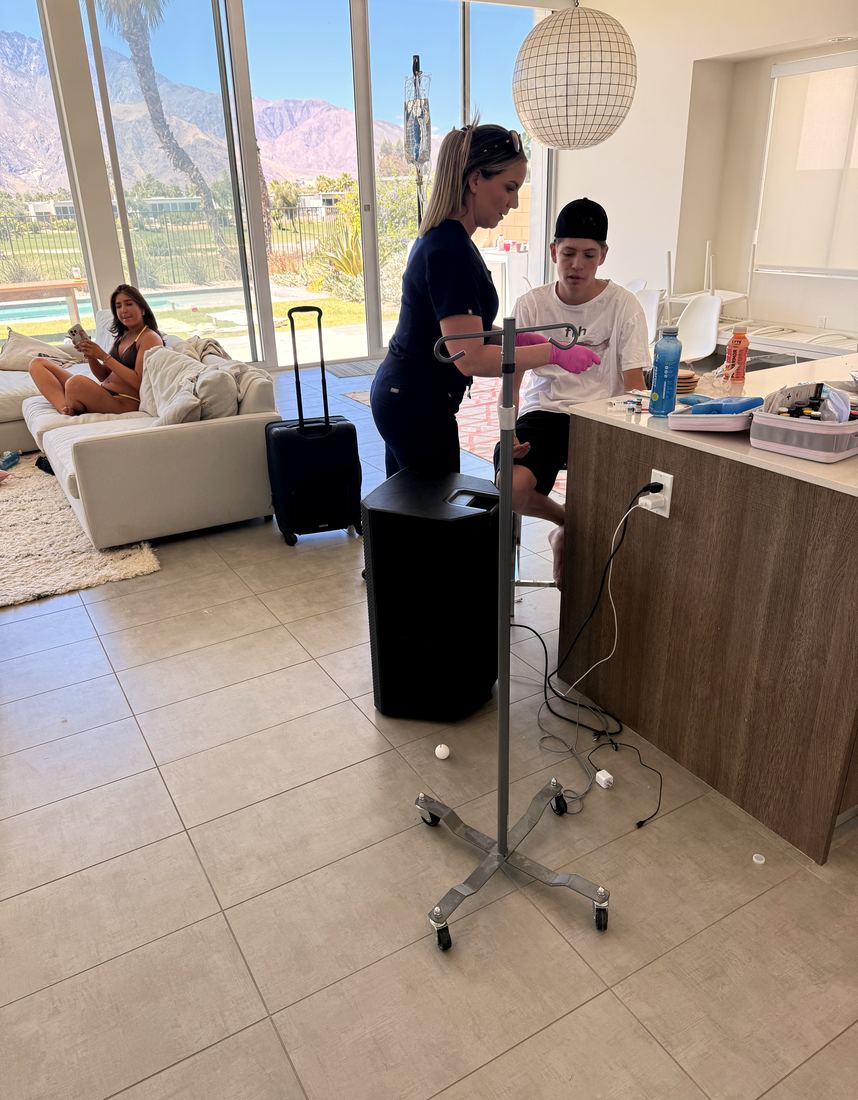
What do we check before every drip?
- Medical history and current diagnoses
- Current medications and supplements
- Known allergies (especially to vitamins, eggs, sulfa)
- Recent medical events (surgery, hospitalization, illness)
- Pregnancy or breastfeeding status
- Specific drip selected against contraindication list
- Pre-existing kidney, liver, or heart conditions
- For NAD+ and high-dose vitamin C: additional screening
Pharmacy-sourced, lot-documented.
Licensed Compounding Pharmacies
Every bag, vitamin, and additive comes from a licensed California compounding pharmacy. We do not buy online, in bulk from foreign suppliers, or from any unverified source. This is the specific failure the state has documented elsewhere: the California State Board of Pharmacy reports that its inspections of some IV locations "have revealed violations of legal requirements, including purchasing products from unlicensed sources" (California State Board of Pharmacy, Education for all Compounders). Sourcing is not a detail. It is the whole thing.
Lot & Expiration Tracking
Every component is logged at the time of administration: ingredient, source, lot number, expiration date. We keep records.
Cold Chain Maintained
Temperature-sensitive ingredients (NAD+, certain vitamins) are stored under refrigeration and transported in insulated containers between pharmacy and client.
Single-Use Supplies
All IV catheters, tubing, syringes, and needles are single-use and disposed of in sharps containers we transport away from your home.
What is your nurse doing while you relax?
The IV looks passive, fluid drips from a bag into your arm. The clinical work is in monitoring, adjusting, and being ready if something changes. Your RN does not leave you alone.
- Vital signs check at IV start
- Ongoing monitoring for reaction or discomfort
- Drip rate adjustment if you feel any unusual sensation
- Immediate access to anti-allergic, anti-nausea, and emergency medications
- Ability to discontinue and call emergency services if needed
- Final vital signs at completion before leaving
If you see a physician regularly, tell them you do IV.
IV vitamin therapy can affect lab results, interact with certain medications, and influence the picture your physician is forming about your health. Be open about what you are doing and when. We are happy to provide documentation of any IV you have received with us.
What happens if something goes wrong?
Serious adverse reactions to IV vitamin therapy are rare. The most common issues are minor, mild bruising at the IV site, brief vitamin taste, warmth during infusion. These are not problems. But we plan for the rare situations too.
- IV removed immediately at first sign of concerning symptom
- RN remains with you and assesses
- Emergency medications (epinephrine, antihistamines) available onsite
- 911 called immediately if situation requires it
- Follow-up call within 24 hours and full incident documentation
- No charge if a session is cut short for safety reasons
Who stands behind your care?
WholeHealth Hydration operates under physician oversight. Our medical director sets and reviews protocols, every client receives a good-faith exam and an individualized order from a licensed prescriber before treatment, and licensed Registered Nurses deliver every visit. That structure is what California requires rather than what we chose to exceed: the Board of Pharmacy states that IV hydration "is a medical treatment that requires an examination with an authorized prescriber before administration," and notes that IV hydration clinics are "generally unregulated" in the state (Policy Statement, August 1, 2024). Under California law a Registered Nurse administers medications and therapeutic agents to carry out a regimen ordered by a physician or other authorized prescriber (California Business and Professions Code § 2725).
Sanjivan Singh Kohli, MD
Medical DirectorPulmonary & Critical Care Medicine, Sleep Medicine, Internal Medicine, and Advanced Procedures. Oversees WholeHealth Hydration's IV and peptide protocols.
Ask before you book.
If you have specific concerns, medical history, medications, or just want to talk through whether IV is right for you, message us first.
Who comes, what they check, and what happens if something changes.
Is a mobile IV nurse the same as an IV technician?
No. A registered nurse is licensed to assess you, place the line, monitor how you respond and act if something changes. Some mobile IV services send a technician or a medical assistant working under remote supervision. At WholeHealth Hydration a licensed RN performs the entire visit, from the assessment to the last check before leaving.
Who actually comes to my home?
A California-licensed registered nurse. The same person assesses you, places the IV, stays for the infusion and checks you before leaving. Nobody is dropped off and left with a bag running.
What do you check before starting a drip?
Health history, current medications, allergies, hydration status and vital signs. Some people are told a drip is not appropriate that day, and that is a normal outcome rather than a rare one.
What happens if I react badly during a drip?
Your nurse is present for the whole infusion, which is the point of a nurse rather than a technician. The infusion is stopped, you are assessed, and emergency services are called if the situation warrants it. Critical-care experience is exactly the background this relies on.
Where do the ingredients come from?
Licensed compounding pharmacies, with lot numbers documented for every ingredient in every drip. If you ask what was in your bag and where it came from, we can tell you.
Is IV therapy safe for everyone?
No, and we say so. Certain heart, kidney and blood-pressure conditions, some medications and pregnancy all change the calculation. That is why the assessment happens before the drip rather than after the booking.