
How IV hydration actually works.
Why a drip in your arm rehydrates you faster and more completely than the same volume of water by mouth, and where the mobile IV category gets it right and wrong. For the honest bottom line, see whether IV therapy actually works.
The absorption math.
When you drink water, only a fraction reaches your bloodstream. The rest is absorbed slowly through the small intestine, filtered through the liver, and a portion is excreted before it ever delivers anything useful. Oral vitamin C, for example, has a hard absorption ceiling, past around 200 mg orally, the percentage absorbed drops sharply.
IV bypasses all of that. Fluid, electrolytes, and vitamins enter your bloodstream directly. You hit higher plasma concentrations faster, and you do it without depending on a gut that may be slow, irritated, or already compromised by illness, alcohol, or dehydration itself.
Oral hydration depends on a functioning gut. IV does not. That is the entire point.
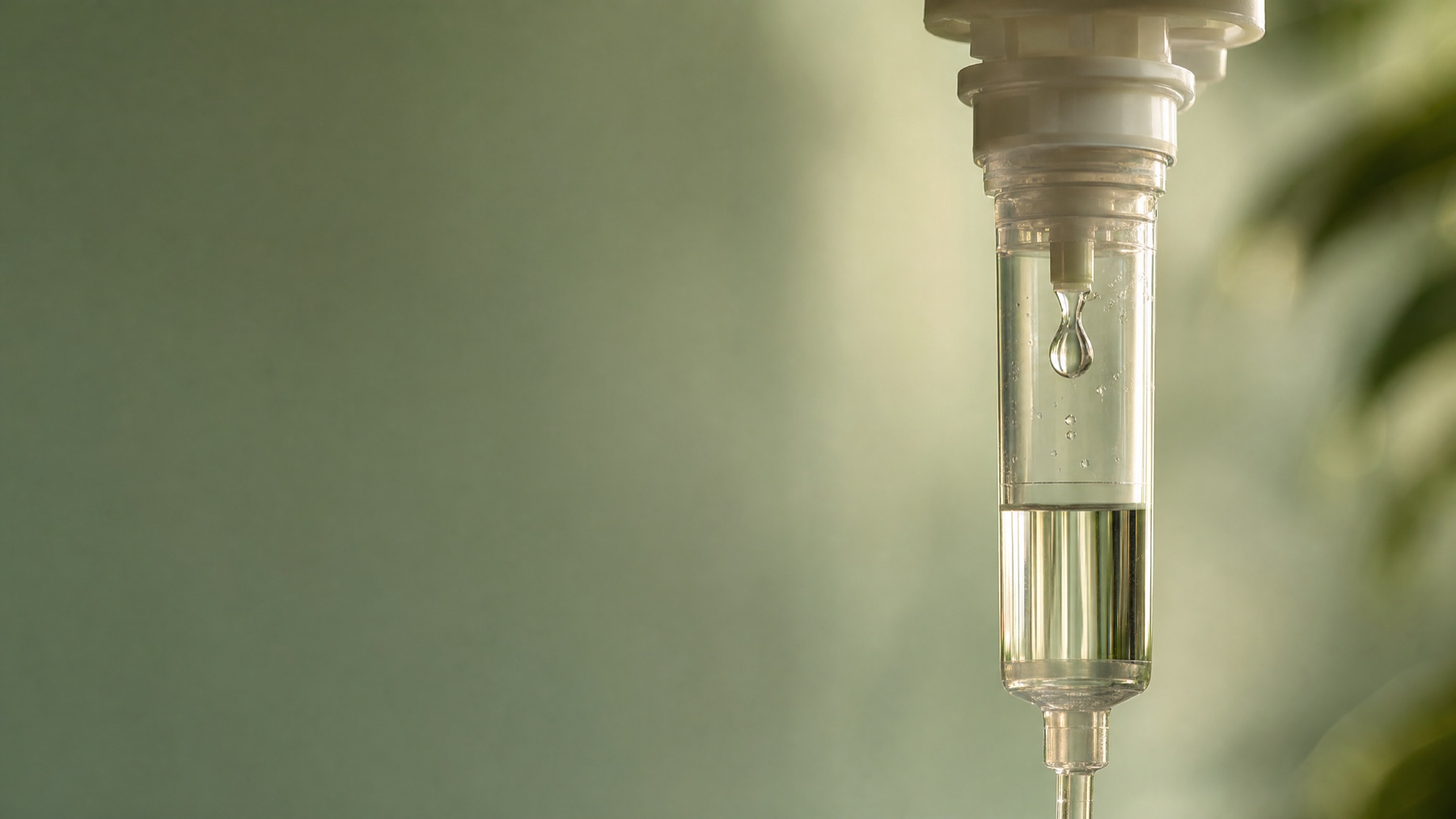
Straight to the bloodstream.
An IV delivers fluid, electrolytes, and vitamins directly into circulation, past the gut's absorption limits. That means higher plasma levels, faster, without depending on how well your digestion happens to be working that day.
Your visit, step by step.
Choose your drip, name your time.
Pick from the menu and book online in minutes. Same-day appointments are often available across Orange County, Los Angeles, Riverside, and San Bernardino.
- Book online in minutes
- Same-day slots often available
- Home, hotel, or office

A licensed RN, at your door.
Your nurse arrives with everything needed, every bag and additive pharmacy-sourced and lot-documented. Discreet, professional, and on time.
- California-licensed RN, not a tech
- Pharmacy-sourced supplies
- Unmarked, discreet arrival

Settle in. We handle the rest.
The line is placed gently by hospital-experienced hands, and the drip runs 30 to 60 minutes while you read, work, or simply rest.
- 30 to 60 minutes, start to finish
- Placed by critical care trained nurses
- Your couch, your pace

Feel the difference.
Most clients notice the change the same day. Your nurse walks you through simple aftercare and stays available for follow-up questions.
- Simple aftercare guidance
- Follow-up questions welcome
- Rebook in one tap

What is actually in the bag?
Most WholeHealth drips use one of two base IV fluids, chosen based on what your body needs.
Normal Saline (0.9% NaCl)
A sterile solution of sodium chloride matched to the salt concentration of your blood. The standard hospital fluid for hydration and the carrier for most of our drips. Replaces volume and sodium quickly.
Lactated Ringer's
Saline plus potassium, calcium, and lactate (which the liver converts to bicarbonate). Used when we want broader electrolyte replacement, post-illness, severe dehydration, or significant fluid loss.
Sterile Water
Sometimes used as the carrier for vitamin pushes where we are not trying to add volume, just deliver a concentrated nutrient mix.
5% Dextrose (D5W)
Saline with added dextrose for clients who need a small glucose component (rare in wellness IV but available for specific protocols).
The situations IV actually solves.
Dehydration from illness
Vomiting, diarrhea, fever, or a stomach bug impair the gut's ability to absorb water, and IV bypasses that. Significant or persistent symptoms, a high fever, or dehydration in children should be evaluated by a physician or urgent care first.
Hangover recovery
Alcohol is a diuretic and irritates the GI tract. Most hangovers are part dehydration, part inflammation, part low blood sugar. IV addresses the first two directly.
Pre and post athletic events
Endurance athletes lose more fluid and electrolytes than they can replace mid-race. Pre-load and post-recovery IVs accelerate the return to baseline.
Long travel days
Airplane cabins are dehydrating. IV is a faster reset than oral hydration after international flights or back-to-back travel.
Migraine relief
Dehydration is a known migraine trigger. Magnesium plus hydration is a well-studied acute migraine intervention.
Vitamin replacement
For deficiencies that cannot be corrected quickly by mouth, particularly B12 (often poorly absorbed orally) and high-dose vitamin C.
Where will IV not help?
We will be straightforward, IV is not magic and it is not the right answer for every wellness goal. Where IV is genuinely useful, it is excellent. Where it is not, we will tell you.
- Chronic conditions that need ongoing medical management, see your physician
- Sustained weight loss, IV does not replace nutrition or training
- Mental health concerns, IV will not treat depression or anxiety disorders
- Skin conditions that need topical or systemic treatment
- Sleep disorders that require sleep medicine evaluation
- "Detox" claims, your liver and kidneys do most of that, not vitamins
Match the right drip to the situation.
Browse the menu, pick a drip, or message us and we will help you choose based on what you are actually trying to accomplish.
Hydration therapy, in plain terms.
What is hydration therapy?
Hydration therapy is the delivery of fluid and electrolytes directly into the bloodstream through an IV, rather than relying on drinking and digestion. It is the same principle used in hospitals, delivered at home by a registered nurse for people who are depleted rather than ill.
Is hydration therapy the same as an IV drip?
In everyday use, yes. Hydration therapy, IV drip, IV infusion and vitamin drip all describe fluid delivered intravenously. What differs between them is what is added to the bag and why.