
When people ask whether peptides are safe and legal, they are usually thinking about two things that could not be further apart. On one side is physician guided medical care: a licensed clinician evaluates you, screens your history, writes an individualized prescription, and a licensed pharmacy prepares it. On the other side is a gray market of vials sold online, often labeled research use only, with no prescription, no exam, and no accountability for what is actually in the bottle.
GLP-1s Are FDA Approved
Semaglutide and tirzepatide are FDA approved for chronic weight management, with a defined safety profile, monitoring requirements, and known contraindications.
BPC-157 Remains Investigational
As of mid-2026, BPC-157 is not FDA approved and is not on the FDA's list of substances permitted for pharmacy compounding. Its regulatory review is still ongoing.
Prescription and Pharmacy Required
The safe, legal path runs through a licensed clinician who performs a good faith exam and a licensed pharmacy that prepares the order, never a research-use-only vial bought online.
The label research use only is not a wellness disclaimer. It signals that the product was never intended for human use and was never evaluated by the FDA for safety, purity, or dosing in people. Buying and injecting those products is where the real danger lives, and it is a world we tell every patient to stay out of.
At WholeHealth Hydration, peptide therapy is always the first kind: physician guided. It is not a walk up wellness product you can simply buy. It begins with a consultation, a good faith medical exam, and eligibility screening before any prescription is written.
Which peptides are FDA approved, and which are investigational?
Honesty here matters more than marketing. Very few peptides are FDA approved. The clearest example is the GLP-1 class. Semaglutide and tirzepatide are FDA approved for chronic weight management in adults, and they are also studied and prescribed under physician supervision. That approval carries a defined safety profile, monitoring requirements, and known contraindications.
Many other peptides that get talked about online are investigational, meaning they are not FDA approved for these uses. This includes BPC-157, TB-500 (a thymosin beta-4 fragment), Epitalon, Semax, Selank, GHK-Cu, MOTS-c, and KPV, among others. Some are used under physician supervision through a licensed compounding pharmacy where legally permissible, and some are simply not appropriate for compounding at all. None of these should be understood as FDA approved.
We will never imply approval where none exists. If a peptide is investigational, we say so plainly, describe it as studied or researched to support a given function rather than to treat, cure, or prevent anything, and let you decide with a clinician whether it fits your situation.
- FDA approved for chronic weight management: the GLP-1 class, including semaglutide and tirzepatide.
- Investigational and not FDA approved: BPC-157, TB-500, Epitalon, Semax, Selank, GHK-Cu, MOTS-c, KPV and others.
- Framing we use: studied to support, researched for, may support. Never treats, cures, or prevents.
Where does BPC-157 stand with the FDA?
BPC-157 is one of the most talked about compounded peptides, so its regulatory status is worth stating carefully. As of mid-2026, BPC-157 is not FDA approved, and it is not on the FDA's list of bulk drug substances permitted for use in pharmacy compounding under section 503A. In practical terms, that leaves it in a regulatory gray zone.
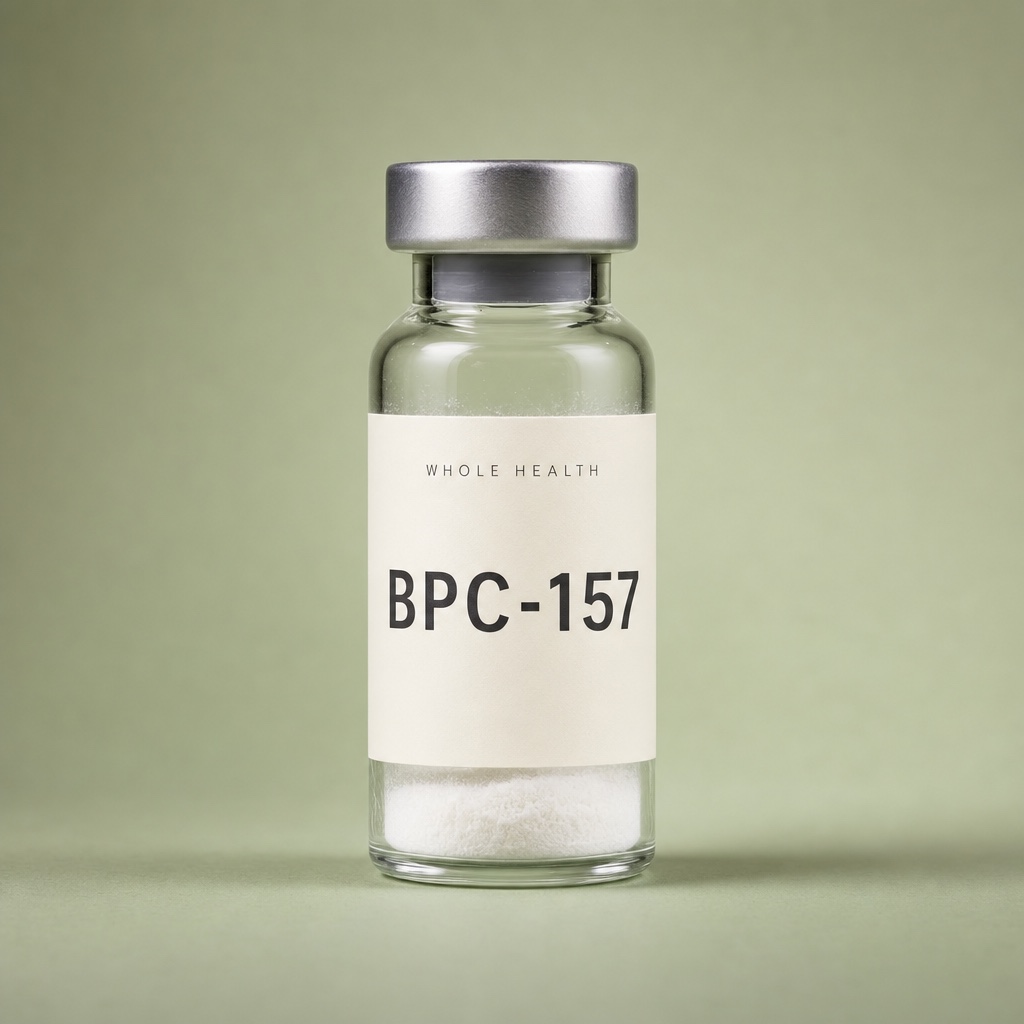
The FDA has continued to evaluate whether BPC-157 and several other peptides should be permitted for compounding. That review is ongoing, and until the FDA formally adds a substance to the approved list, it is not cleared for that use. We track this process closely because it directly affects what can and cannot be legally compounded.
One important nuance: recommendations from FDA advisory committees are advisory and non-binding. They are proposals, not a final rule. Before a substance is permitted, the FDA publishes a proposed rule, opens a public comment period, and only then issues a final rule, a process that typically takes many months. We would rather tell you the real, current status than a convenient one.
For a deeper look at this one peptide, see our full guide to what BPC-157 is, what the research shows, and where it stands in 2026.
Why should you never buy research-only peptides online?
Websites that sell peptides as research chemicals sit outside the medical system on purpose. There is no prescriber verifying that the product is right for you, no exam, no screening for contraindications, and no licensed pharmacy standing behind the contents. Independent testing has repeatedly found problems with such products, including incorrect dosing, contaminants, and ingredients that do not match the label.
Injecting an unknown substance of unknown purity is a genuine health risk, not a shortcut. It also removes the single most protective feature of legitimate care: a clinician who knows your history and is responsible for your safety. If a source asks for no prescription and ships internationally with a research use only sticker, treat that as a reason to walk away, not a bargain.
The safe and legal path is the opposite of anonymous. It runs through a licensed clinician and a licensed pharmacy, with your name on the prescription.
Why do physician oversight and a licensed pharmacy matter?
Physician oversight is not a formality. A clinician reviews your medical history, current medications, and goals, orders labs where appropriate, screens for the conditions that make a given peptide unsafe for you, sets an individualized dose, and monitors you over time. That relationship is what turns a molecule into responsible medical care.
The pharmacy side matters just as much. A licensed compounding pharmacy follows quality standards for sourcing, sterility, and preparation, so what is in the vial matches the prescription. This is the difference between a product prepared under regulatory oversight and one shipped from an unaccountable seller. When a peptide cannot be legally and safely compounded, the honest answer is that it is not available through us, and we will say so.
For weight management specifically, the GLP-1 medications are prescribed as an adjunct to a reduced calorie diet and increased physical activity, with ongoing physician monitoring. They are a tool inside a plan, not a standalone fix.
Who should avoid peptides?
Even legitimate, prescribed peptides carry real considerations. For the GLP-1 class, common side effects include nausea and other gastrointestinal upset, especially as the dose increases. These medications are contraindicated in people with a personal or family history of medullary thyroid carcinoma or Multiple Endocrine Neoplasia syndrome type 2, and are not appropriate during pregnancy. A history of pancreatitis and certain other conditions also require careful evaluation. This is exactly why eligibility screening exists.
For investigational peptides, the honest safety picture is that long term human data is limited, which is part of why the FDA has not approved them for these uses. That uncertainty is a reason for caution and close physician judgment, not a reason to self experiment.
In short, peptides are not right for everyone. People who are pregnant or breastfeeding, people with the thyroid or endocrine histories noted above, and anyone whose clinician determines the risks outweigh the potential benefit should not use them. The only way to know your situation is a real evaluation with a licensed clinician.
This page is educational information, not medical advice, and it is not intended to diagnose, treat, cure, or prevent any disease. Please consult your physician before starting any therapy. If you are experiencing a medical emergency, call 911. To find out whether peptide therapy is appropriate for you, book a medical consultation with WholeHealth Hydration. We are based in Chino Hills and serve Orange County, Los Angeles, Riverside, and San Bernardino. Call (213) 652-2912.
Frequently asked questions
Are peptides legal in the United States?
It depends entirely on the peptide and how it is obtained. FDA approved peptides like the GLP-1 medications semaglutide and tirzepatide are legal to prescribe for their approved uses. Many other peptides are investigational and not FDA approved; some may be compounded under physician supervision at a licensed pharmacy where legally permitted, while others are not. Peptides bought online as research chemicals are not a legal path for human use. The safe route is always a prescription from a licensed clinician.
Is BPC-157 FDA approved?
No. BPC-157 is not FDA approved, and it is investigational. As of mid-2026 it is not on the FDA's list of bulk drug substances permitted for pharmacy compounding, and whether it should be is still under FDA review. Any advisory committee recommendation in that process is a non-binding proposal rather than a final rule. We report its current status plainly rather than implying approval it does not have.
Why should I not buy peptides from a website?
Products sold online as research use only were never intended or evaluated for human use, and independent testing has found issues like incorrect dosing, contaminants, and mislabeled contents. There is no clinician screening you for safety and no licensed pharmacy standing behind the vial. Injecting an unknown substance is a real health risk. Legitimate peptide therapy runs through a licensed clinician and a licensed pharmacy with your name on the prescription.
What are the side effects and who should avoid peptides?
For the GLP-1 class, common side effects include nausea and gastrointestinal upset. These medications are contraindicated in people with a personal or family history of medullary thyroid carcinoma or MEN2, are not appropriate in pregnancy, and require caution with a history of pancreatitis. Investigational peptides have limited long term human data. This is not medical advice; a licensed clinician must evaluate your history to determine whether any peptide is appropriate for you.
How do I know if peptide therapy is right for me?
The only reliable way is a medical consultation. A licensed physician or nurse practitioner performs a good faith exam, reviews your history and medications, screens for contraindications, and orders labs where appropriate before writing any individualized prescription. Booking with WholeHealth Hydration is a medical consultation, not a walk up drip. Call (213) 652-2912 to schedule. We are based in Chino Hills and serve Orange County, Los Angeles, Riverside, and San Bernardino.